2 Eylül 2013 Pazartesi

ABD ordusunda ilginç kampanya

ABD ordusunda ilginç kampanya

ABD ordusuna mensup askerlerin Suriye'ye müdahaleye karşı başlattıkları kampanya sosyal medyada büyük ses getiriyor.

"BEN DONANMAYA SURİYE'NİN İÇ SAVAŞINDA EL KAİDE İÇİN SAVAŞMAK AMACIYLA KATILMADIM


Üzerlerinde askeri üniformalar olan yüzleri görünmeyen erkekler ellerinde, "Ben orduya/donanmaya Suriye'nin iç savaşında El Kaide için savaşmak amacıyla katılmadım" yazılı kağıtlarla çekilen fotoğraflarını internette paylaşıyor.

"BEN DENİZ PİYADELERİNE SURİYE'NİN İÇ SAVAŞINDA EL KAİDE İÇİN SAVAŞMAK AMACIYLA KATILMADIM"


Kampanya ilk olarak Reddit'te "ordu" başlıklı kanalda Hava Kuvvetleri Ulusal Muhafızı olduğu belirtilen "slothinator" kullanıcısının paylaştığı fotoğrafla başladı.
"OBAMA, SURİYE'DE SENİN EL KAİDE İSYANCILARIN İÇİN SAVAŞMAK AMACIYLA CEPHEYE GİTMEYECEĞİM. UYANIN MİLLET"

Hız limiti artık 70 km değil

Hız limiti artık 70 km değil

Emniyet Genel Müdürlüğü, yerleşim yerleri içinde hız sınırının 90 kilometreye çıkarılmasına imkan sağlayan bir düzenleme hazırladı.
Emniyet Genel Müdürlüğü, yerleşim yerleri içinde hız sınırının 90 kilometreye çıkarılmasına imkan sağlayan bir düzenleme hazırladı. Okulların açılmasıyla birlikte uygulanması hedeflenen düzenlemeyle şehir içinde hız sınırı 70 kilometreden 90 kilometreye çıkarılacak.
Karayolları Trafik Yönetmeliği, yerleşim yerlerindeki hız limitini 50 kilometre olarak belirliyor. Yönetmelikte, Ulaşım Koordinasyon Merkezleri (UKOME) ile il trafik komisyonlarına yerleşim yerleri içindeki hız limitlerini 20 kilometreye kadar artırma yetkisi veriliyor.
Birçok şehirde, hız sınırı 20 kilometre artırılarak 70 kilometreye çıkarmasına rağmen trafik sıkışıklığının önüne geçilemiyor. MOBESE kameralarını ya da radar ile hız denetimi yapan ekipleri gördüklerinde hızı düşüren sürücüler, denetimi geçtikten sonra tekrar hızlanıyorlar.
Bazı bölgelerde de yerleşim yerlerinin büyüyüp bağlantı yollarının şehir içinde kalması nedeniyle 70 kilometrelik hız sınırı uygulanması sürücüleri zorluyor.
-Ceza 90 kilometreyi aşınca yazılacak
Emniyet Genel Müdürlüğü Trafik Dairesi Başkanlığı, trafik sıkışıklığını azaltmak amacıyla şehir içinde uygun standartlara sahip yollarda hız sınırının artırılmasına olanak sağlayan düzenleme hazırladı.
Okulların açılmasıyla trafik yoğunluğu artacağı için düzenlemenin bu döneme yetiştirilmesi hedefleniyor. Trafik Dairesi Başkanlığı, ilgili bakanlıkların görüşüne sunduğu düzenlemeyi en geç Eylül sonunda uygulamaya sokmayı planlıyor.
Düzenlemenin yürürlüğe girmesiyle yönetmelikteki hız sınırları değiştirilecek ve UKOME ile il trafik komisyonlarının uygun bulduğu yollarda hız sınırı, polisin hız cezası yazarken tanıdığı yüzde 10'luk opsiyonla birlikte 90 kilometreye çıkarılacak.

1 Eylül 2013 Pazar

Katliamlara karşı 100 binlik mesaj

Katliamlara karşı 100 binlik mesaj
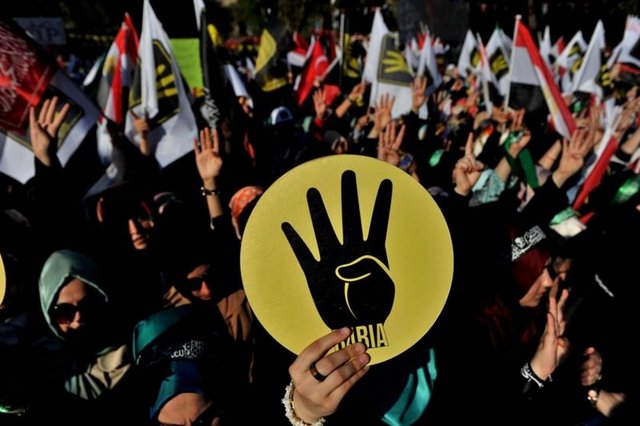
Genç Hareket oluşumu önderliğinde örgütlenen vatandaşlar, "Mısır ve Suriye için BM ile Batı'ya 100 binlik mesaj" sloganıyla Saraçhane Parkı'nda protesto gösterisi düzenledi.


'Atatürk Paris'te bir golf kulübüne üye oldu'

'Atatürk Paris'te bir golf kulübüne üye oldu'
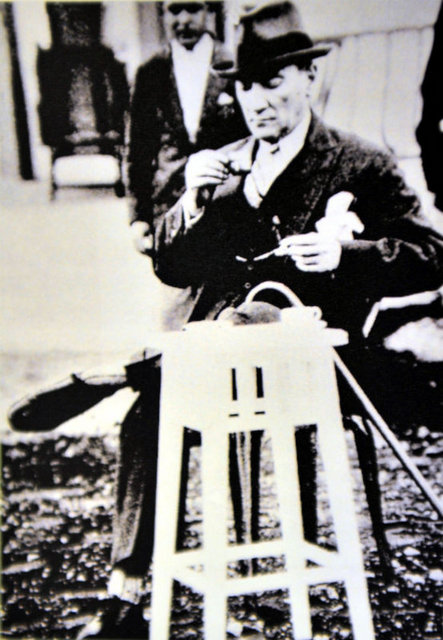
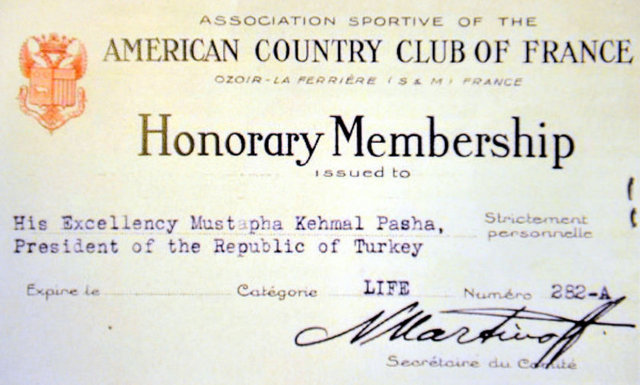
"Türkiye'de Golf'ün 118 Yılı" adlı kitap tamamlandı. Atatürk'ün Paris'teki bir golf kulübüne üye olduğu belgesiyle ortaya çıktı. 20 devlet liderinin üye olduğu dünyaca ünlü kulübe kayıt 1933'te yapıldı. - Aykan ÇUFAOĞLU / GAZETE HABERTÜRK


Varmısın Yokmusun Başlıyo

Efsane Yarışma Ahmet Çakar'ın Sunumuyla Kendi Kanalında Başlıyor.
Ahmet Çakar Şimdide Varmısın Yokmusunda

Genelkurmay heyeti sınırda!

Genelkurmay heyeti sınırda!
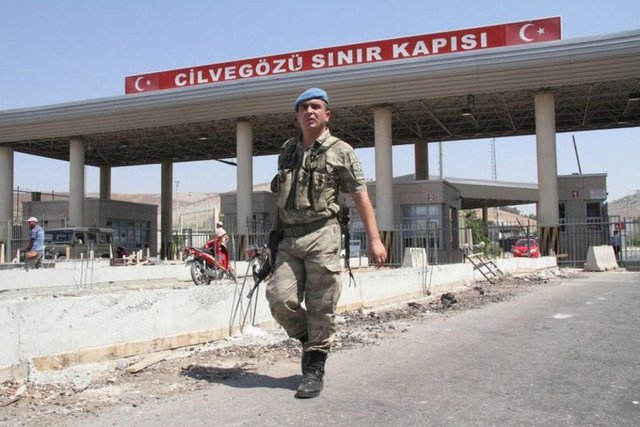
Suriye'de yaklaşık bin 500 sivilin yaşamını yitirdiği kimyasal saldırının ardından başta ABD olmak üzere uluslararası güçlerin bu ülkeye yönelik olası müdahalesi öncesi Türk Silahlı Kuvvetleri sınırda güvenlik tedbirlerini arttırdı. Bu kapsamda 4 generalin yer aldığı Genelkurmay Başkanlığı heyeti, Hatay'da askeri birlikler ve Cilvegözü sınır kapısında incelemelerde bulunuyor.


Gezi Parkı yeniden kapatıldı!

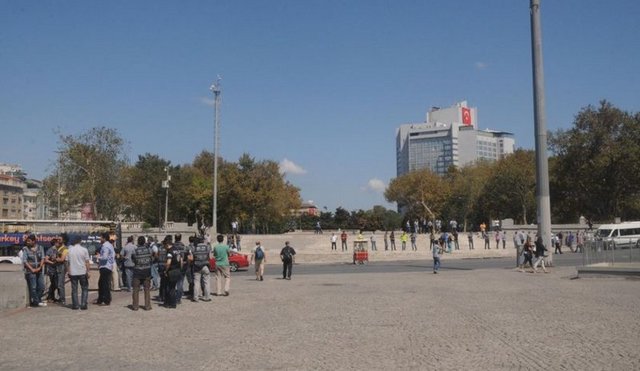
1 Eylül Dünya Barış günü kapsamında yapılması planlanan insan zinciri eylemi nedeniyle polis Taksim Gezi Parkı'nı kapattı. Polis Taksim Meydanı'nda da barış zinciri oluşturan grubu dağıttı


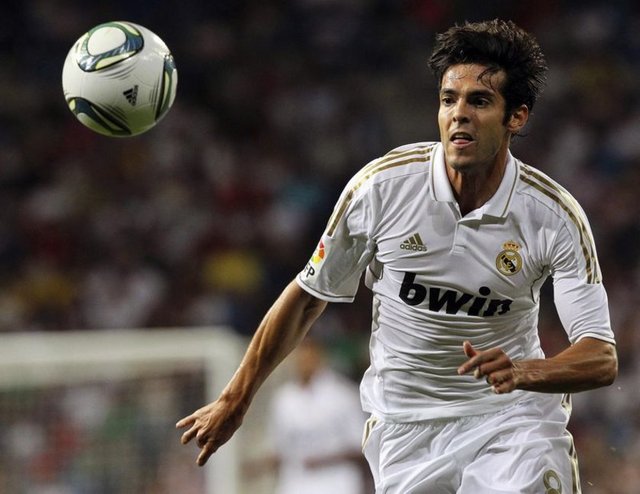
Kaka Yuvaya Geri Döndü


Transferde bombalar patladı
Real Madrid'den ayrılan bir diğer dünya yıldızı ise Kaka...
Brezilyalı yıldız, eski takımı Milan'a transfer oldu.

Mesut Özil'in Yeni Takımı


Gecenin diğer bombaları yine Madrid'den geldi.

Real Madrid'de forma giyen Mesut Özil, İngiliz devi Arsenal'e transfer oldu.
Türk asıllı Alman futbolcu için ödenecek bonservis bedeli 50 milyon Euro.

Gareth Bale Real Madrid'te


Ve dünyanın beklediği transfer gerçekleşti. Real Madrid, Tottenham'ın 24 yaşındaki Galli yıldızı Gareth Bale'ı transfer ettiğini internet sitesinden resmen açıkladı. 24 yaşındaki Bale ile yapılan anlaşmanın 6 yıllık olduğu belirtildi.
Real Madrid, uzun süredir peşinde koştuğu Gareth Bale'i 6 yıllığına renklerine bağladı. Bu transfer için Tottenham'a 91 milyon Euro ödenecek.

Craig Zucker: What Happens When a Man Takes on the Feds

Craig Zucker: What Happens When a Man Takes on the Feds

Buckyballs was the hottest office game on the market. Then regulators banned it. Now the government wants to ruin the CEO who fought back.


New York
'So this is what starting over looks like. I have a seven-by-seven space with two little desks in it."
Craig Zucker is remarkably good-humored, considering what he's been through over the past year—and the tribulations that lie ahead. He's referring to his office, rented month-to-month in a dilapidated building in a dusty corner of Brooklyn. There is construction all around, graffiti on the brick walls, and unfinished doors and windows.
It's a long way from the Soho digs the 34-year-old used to occupy. Mr. Zucker is the former CEO of Maxfield & Oberton, the small company behind Buckyballs, an office toy that became an Internet sensation in 2009 and went on to sell millions of units before it was banned by the feds last year.
A self-described "serial entrepreneur," Mr. Zucker looks the part with tussled black hair, a scraggly beard and hipster jeans. Yet his casual-Friday outfit does little to subdue his air of ambition and hustle.
Nowadays Mr. Zucker spends most of his waking hours fighting off a vindictive U.S. Consumer Product Safety Commission that has set out to punish him for having challenged its regulatory overreach. The outcome of the battle has ramifications far beyond a magnetic toy designed for bored office workers. It implicates bedrock American notions of consumer choice, personal responsibility and limited liability.
It all began while the Ohio native was wrapping up his previous venture, Tap'd NY, "a bottled water company that was purifying New York City tap water and selling it to New Yorkers as the local, honest bottled-water alternative." You read that right: Mr. Zucker persuaded New Yorkers to pay for rebranded tap water.
Jake Bronstein, Mr. Zucker's marketing director at Tap'd NY, was at the time the proprietor of a blog called Zoomdoggle. "He would produce eight posts a day," Mr. Zucker recalls, "one for each hour of the workday: games, jokes, adult fun. What Jake wanted to do was to find a product that would fit perfectly with that audience."
The answer came in the form of neodymium magnets. These small, powerful rare-earth magnets can be stacked like Legos, stretched and used to make infinite shapes. Maxfield & Oberton, the company Messrs. Zucker and Bronstein eventually formed, packaged the magnets and called them "Buckyballs," after the American architect and futurist Buckminster Fuller.
"In March of 2009, we ordered 100 sets of magnets from China. We literally put our last $1,000 each in the business," Mr. Zucker says. At first the company filled a few hundred orders a day on its own website. But then Buckyballs made their way into the blogosphere. "Then very, very quickly other websites were calling to buy the product and resell it. We realized we had a really great brand."
In August 2009, Maxfield & Oberton demonstrated Buckyballs at the New York Gift Show; 600 stores signed up to sell the product. By 2010, the company had built a distribution network of 1,500 stores, including major retailers like Urban Outfitters and Brookstone. People magazine in 2011 named Buckyballs one of the five hottest trends of the year, and in 2012 it made the cover of Brookstone's catalog.
Maxfield & Oberton now had 10 employees, 150 sales representatives and a distribution network of 5,000 stores. Sales had reached $10 million a year. "Then," says Mr. Zucker, "we crashed."
On July 10, 2012, the Consumer Product Safety Commission instructed Maxfield & Oberton to file a "corrective-action plan" within two weeks or face an administrative suit related to Buckyballs' alleged safety defects. Around the same time—and before Maxfield & Oberton had a chance to tell its side of the story—the commission sent letters to some of Maxfield & Oberton's retail partners, including Brookstone, warning of the "severity of the risk of injury and death possibly posed by" Buckyballs and requesting them to "voluntarily stop selling" the product.
It was an underhanded move, as Maxfield & Oberton and its lawyers saw it. "Very, very quickly those 5,000 retailers became zero," says Mr. Zucker. The preliminary letters, and others sent after the complaint, made it clear that selling Buckyballs was still considered lawful pending adjudication. "But if you're a store like Brookstone or Urban Outfitters . . . you're bullied into it. You don't want problems."
As for the corrective-action plan, it was submitted at 4 p.m. on the July 24 deadline. Yet the very next morning the commission filed an administrative lawsuit against Maxfield & Oberton, suggesting the company's plan was never seriously considered.
The commission alleged that Buckyballs pose substantial hazards, which no remedy short of a full recall could address. Buckyballs, the commission said, "pose a risk of magnet ingestion by children below the age of 14, who may . . . place single or numerous magnets in their mouth."
Although no deaths have been associated with Buckyballs, the commission alleged that "numerous incidents involving ingestion by children under the age of 14 have occurred," including a 3-year-old who swallowed Buckyballs attached to her home refrigerator and a 4-year-old who ingested Buckyballs used to decorate his mother's wedding cake. These were troubling cases. But considering the thousands of other potentially dangerous products purchased everyday, it's hard to blame them on an inherent defect in Buckyballs.
"When used as intended there's never been an incident involving someone over the age of 14," Mr. Zucker says. "Like any other product in your house, if it's used in an unintended way by an unintended consumer, it of course has the ability to create an injury. Take household cleaners, knives, power tools, detergent pods. Or take balloons, which are actually intended for children and create deaths every few years. So we didn't see how the product, when used as intended—following the warnings, following the safety program—could be defective."
Buckyballs' initial conception and subsequent marketing, Mr. Zucker says, shows they were never intended for children. "We were in the lexicon of popular culture," he says. "And if you look back at this press, it was very clearly targeted at the adult community. It was in People magazine, in Real Simple magazine—it was never in Parenting magazine saying they're great for children."
Mr. Zucker and his colleagues were particularly appalled by the commission's claims, given that the warnings and safety programs they used were developed in collaboration with commission staff.
Initially the product was labeled "13+," since the relevant statute at the time defined "children's products" as intended for children 12 and under. But when a voluntary industry practice defining "toys" as intended for children 14 and under became the legal standard, Maxfield & Oberton conducted a voluntary recall: In spring 2010, any consumer who had purchased Buckyballs labeled "13+" was offered a refund. Of over 175,000 units sold, fewer than 50 were returned by consumers.
Stores also received packaging with aggressive new warnings. "Keep away from all children!" the label said. "Do not put in nose or mouth. Swallowed magnets can stick to intestines causing serious injury or death. Seek immediate medical attention if magnets are swallowed or inhaled."
"Maxfield & Oberton had a comprehensive safety program that included not just warnings but a way to restrict sales to stores that were exclusively or primarily selling children's products," Mr. Zucker says. "Toys 'R' Us didn't qualify. They wanted Buckyballs for their brick-and-mortar stores, but we wouldn't even take a call from them."
To enter into a sales agreement, retailers were required to complete a safety questionnaire and commit to a Buckyballs Responsible Seller Agreement. "When Maxfield & Oberton did that initial recall, 600 stores didn't pass the test, and the company paid to bring the product back."
Nonetheless, the commission pressed ahead with its war on Buckyballs. Most infuriating was the commission's argument that a total recall was justified because Buckyballs have "low utility to consumers" and "are not necessary to consumers."
"Two and a half million adults spent $30 on a product," Mr. Zucker says. "This wasn't a $5 impulse buy. This was a product that American adults thought had value and wanted it. It's not the government's place to say what has value and what doesn't in a free society."
Maxfield & Oberton resolved to take to the public square. On July 27, just two days after the commission filed suit, the company launched a publicity campaign to rally customers and spotlight the commission's nanny-state excesses. The campaign's tagline? "Save Our Balls."
Online ads pointed out how, under the commission's reasoning, everything from coconuts ("tasty fruit or deadly sky ballistic?") to stairways ("are they really worth the risk?") to hot dogs ("delicious but deadly") could be banned. Commission staff were challenged to debate Mr. Zucker, and consumers were invited to call Commissioner Inez Tenenbaum's "psychic hotline" to find out how it was that "the vote to sue our company was presented to the Commissioners on July 23rd, a day before our Corrective Action Plan was to be submitted."
"It was a very successful campaign," says Mr. Zucker, "just not successful enough to keep us in business." On Dec. 27, 2012, the company filed a certificate of cancellation with the State of Delaware, where Maxfield & Oberton was incorporated, and the company was dissolved.
"The inventory was sold and the business ended," says Mr. Zucker. He thought it was an "honest and graceful exit" to a broken entrepreneurial dream.
But in February the Buckyballs saga took a chilling turn: The commission filed a motion requesting that Mr. Zucker be held personally liable for the costs of the recall, which it estimated at $57 million, if the product was ultimately determined to be defective.
This was an astounding departure from the principle of limited liability at the heart of U.S. corporate law. Normally corporate officers aren't liable for the obligations of a company, and courts are loath to pierce the shield of limited liability unless it can be shown that the corporate entity was a mere facade—that corporate formalities weren't adhered to, the officers commingled personal and corporate funds, and so on.
No such allegations were made against Mr. Zucker. Instead, the commission seeks to extend the holding of United States v. Park, a 1975 Supreme Court case in which the CEO of a food retailer was held criminally liable under the Food and Drug Act for rodent infestation at company warehouses. The CEO, the court ruled, was the "responsible corporate officer" by virtue of being in a position of authority when the health violations occurred.
But in a subsequent case, Meyer v. Holley (2003), the justices clarified that ordinary rules of liability apply unless there is clear congressional intent in the pertinent statute to hold individual officers liable. The statute in Park did include an individual-liability provision. But the relevant law in the Buckyballs case, Section 15 of the Consumer Product Safety Act, regulates the conduct of manufacturers, distributors, retailers and importers as corporate persons, suggesting Congress didn't intend to hold officers liable for recalls when there is a proper corporate entity in place. There is also no question of a criminal violation in Mr. Zucker's case.
Says Mr. Zucker: "The commission's saying that because as CEO I did my duty—didn't violate any law, was completely lawful—I am now the manufacturer individually responsible." Shockingly, the administrative-law judge hearing the case bought the commission's argument, meaning Mr. Zucker will have to defend himself in the Maxfield & Oberton recall case to its conclusion at the administrative level before he can challenge the individual-liability holding on appeal.
Given the fact that Buckyballs have now long been off the market, the attempt to go after Mr. Zucker personally raises the question of retaliation for his public campaign against the commission. Mr. Zucker won't speculate about the commission's motives. "It's very selective and very aggressive," he says. "If you want to ask if this is some sort of reprisal, well, they don't need Craig Zucker anymore."
Mr. Zucker says his treatment at the hands of the commission should alarm fellow entrepreneurs: "This is the beginning. It starts with this case. If you play out what happens to me, then the next thing you'll have is personal-injury lawyers saying 'you conducted the actions of the company, you were the company.' "
And if the commission's reasoning on Buckyballs were to stand, "you won't have a free market anymore—you end up with a place where adults aren't choosing which products they can own."
Mr. Ahmari is an assistant books editor at the Journal.

Elizabeth O'Bagy: On the Front Lines of Syria's Civil War

Elizabeth O'Bagy: On the Front Lines of Syria's Civil War

The conventional wisdom—that jihadists are running the rebellion—is not what I've witnessed on the ground.


    By 
  • ELIZABETH O'BAGY
With the U.S. poised to attack Syria, debate is raging over what that attack should look like, and what, if anything, the U.S. is capable of accomplishing. Those questions can't be answered without taking a very close look at the situation in Syria from ground level.
Since few journalists are reporting from inside the country, our understanding of the civil war is not only inadequate, but often dangerously inaccurate. Anyone who reads the paper or watches the news has been led to believe that a once peaceful, pro-democracy opposition has transformed over the past two years into a mob of violent extremists dominated by al Qaeda; that the forces of President Bashar Assad not only have the upper hand on the battlefield, but may be the only thing holding the country together; and that nowhere do U.S. interests align in Syria—not with the regime and not with the rebels. The word from many American politicians is that the best U.S. policy is to stay out. As Sarah Palin put it: "Let Allah sort it out."

image
Reuters
Free Syrian Army members man a checkpoint in the Aleppo countryside in June.
In the past year, I have made numerous trips to Syria, traveling throughout the northern provinces of Latakia, Idlib and Aleppo. I have spent hundreds of hours with Syrian opposition groups ranging from Free Syrian Army affiliates to the Ahrar al-Sham Brigade.
The conventional wisdom holds that the extremist elements are completely mixed in with the more moderate rebel groups. This isn't the case. Moderates and extremists wield control over distinct territory. Although these areas are often close to one another, checkpoints demarcate control. On my last trip into Syria earlier this month, we traveled freely through parts of Aleppo controlled by the Free Syrian Army, following roads that kept us at safe distance from the checkpoints marked by the flag of the Islamic State of Iraq. Please see the nearby map for more detail.
Contrary to many media accounts, the war in Syria is not being waged entirely, or even predominantly, by dangerous Islamists and al Qaeda die-hards. The jihadists pouring into Syria from countries like Iraq and Lebanon are not flocking to the front lines. Instead they are concentrating their efforts on consolidating control in the northern, rebel-held areas of the country.


image

Groups like Jabhat al Nusra, an al Qaeda affiliate, are all too happy to take credit for successes on the battlefield, and are quick to lay claim to opposition victories on social media. This has often led to the impression that these are spearheading the fight against the Syrian government. They are not.
These groups care less about defeating Assad than they do about establishing and holding their Islamic emirate in the north of the country. Many Jabhat al Nusra fighters left in the middle of ongoing rebel operations in Homs, Hama and Idlib to head for Raqqa province once the provincial capital fell in March 2013. During the battle for Qusayr in late May, Jabhat al Nusra units were noticeably absent. In early June, rebel reinforcements rallied to take the town of Talbiseh, north of Homs city, while Jabhat al Nusra fighters preferred to stay in the liberated areas to fill the vacuum that the Free Syrian Army affiliates had left behind.
Moderate opposition forces—a collection of groups known as the Free Syrian Army—continue to lead the fight against the Syrian regime. While traveling with some of these Free Syrian Army battalions, I've watched them defend Alawi and Christian villages from government forces and extremist groups. They've demonstrated a willingness to submit to civilian authority, working closely with local administrative councils. And they have struggled to ensure that their fight against Assad will pave the way for a flourishing civil society. One local council I visited in a part of Aleppo controlled by the Free Syrian Army was holding weekly forums in which citizens were able to speak freely, and have their concerns addressed directly by local authorities.
Moderate opposition groups make up the majority of actual fighting forces, and they have recently been empowered by the influx of arms and money from Saudi Arabia and other allied countries, such as Jordan and France. This is especially true in the south, where weapons provided by the Saudis have made a significant difference on the battlefield, and have helped fuel a number of recent rebel advances in Damascus.
Thanks to geographic separation from extremist strongholds and reliable support networks in the south, even outdated arms sent by the Saudis, like Croatian rocket-launchers and recoilless rifles, have allowed moderate rebel groups to make significant inroads into areas that had previously been easily defended by the regime, and to withstand the pressure of government forces in the capital. In recent months, the opposition has achieved major victories in Aleppo, Idlib, Deraa and Damascus—nearly reaching the heart of the capital—despite the regime's consolidation in Homs province.
At this stage in the conflict, barring a major bombing campaign by the U.S., sophisticated weaponry, including anti-tank and anti-aircraft weapon systems, may be the opposition's best chance at sustaining its fight against Assad. This is something only foreign governments, not jihadists, can offer. Right now, Saudi sources that are providing the rebels critical support tell me that they haven't sent more effective weaponry because the U.S. has explicitly asked them not to.
There is no denying that groups like Jabhat al Nusra and the Islamic State of Iraq and al-Sham have gained a foothold in the north of Syria, and that they have come to dominate local authorities there, including by imposing Shariah law. Such developments are more the result of al Qaeda affiliates having better resources than an indicator of local support. Where they have won over the local population, they have done so through the distribution of humanitarian aid.
Yet Syrians have pushed back against the hard-line measures imposed on them by some of these extremists groups. While I was last in northern Syria in early August, I witnessed nearly daily protests by thousands of citizens against the Islamic State of Iraq and al-Sham in areas of Aleppo.
Where does this leave the U.S. as the White House contemplates a possible strike? The Obama administration has emphasized that regime change is not its goal. But a punitive measure undertaken just to send a message would likely produce more harm than good. If the Syrian government is not significantly degraded, a U.S. strike could very well bolster Assad's position and highlight American weakness, paving the way for continued atrocities.
Instead, any U.S. action should be part of a larger, comprehensive strategy coordinated with our allies that has the ultimate goal of destroying Assad's military capability while simultaneously empowering the moderate opposition with robust support, including providing them with anti-tank and anti-aircraft weapon systems. This should be combined with diplomatic and political efforts to first create an international coalition to put pressure on Assad and his supporters, and then working to encourage an intra-Syrian dialogue. Having such a strategy in place would help alleviate the concerns of key allies, like Britain, and ensure greater international support for U.S. action.
The U.S. must make a choice. It can address the problem now, while there is still a large moderate force with some shared U.S. interests, or wait until the conflict has engulfed the entire region. Iran and its proxies will be strengthened, as will al Qaeda and affiliated extremists. Neither of these outcomes serves U.S. strategic interests.
Ms. O'Bagy is a senior analyst at the Institute for the Study of War.

Leading From Behind Congress

Leading From Behind Congress

Obama recklessly gambles with American credibility


President Obama's Syrian melodrama went from bad to worse on Saturday with his surprise decision to seek Congressional approval for what he promises will be merely a limited cruise-missile bombing. Mr. Obama will now have someone else to blame if Congress blocks his mission, but in the bargain he has put at risk his credibility and America's standing in the world with more than 40 months left in office.
This will go down as one of the stranger gambles, if not abdications, in Commander in Chief history. For days his aides had been saying the President has the Constitutional power to act alone in response to Syria's use of chemical weapons, and that he planned to do so. On Friday, he rolled out Secretary of State John Kerry to issue a moral and strategic call to arms and declare that a response was urgent.
But on Friday night, according to leaks from this leakiest of Administrations, the President changed his mind. A military strike was not so urgent that it couldn't wait for Congress to finish its August recess and vote the week of its return on September 9. If the point of the bombing is primarily to "send a message," as the President says, well, then, apparently Congress must co-sign the letter and send it via snail mail.
It's hard not to see this as primarily a bid for political cover, a view reinforced when the President's political consigliere David Axelrod taunted on Twitter that "Congress is now the dog that caught the car." Mr. Obama can read the polls, which show that most of the public opposes intervention in Syria. Around the world he has so far mobilized mainly a coalition of the unwilling, with even the British Parliament refusing to follow his lead. By comparison, George W. Bush on Iraq looks like Metternich.
But what does anyone expect given Mr. Obama's foreign-policy leadership? Since he began running for President, Mr. Obama has told Americans that he wants to retreat from the Middle East, that the U.S. has little strategic interest there, that any differences with our enemies can be settled with his personal diplomacy, that our priority must be "nation-building at home," and that "the tide of war is receding." For two-and-a-half years, he has also said the U.S. has no stake in Syria.
image
Associated Press
President Barack Obama delivers remarks about the ongoing situation in Syria in the Rose Garden of the White House on Aug. 31.
The real political surprise, not to say miracle, is that after all of this so many Americans still support military action in response to Syria's use of chemical weapons—50% in the latest Wall Street Journal-NBC poll. Despite his best efforts, Mr. Obama hasn't turned Americans into isolationists.
A Congressional vote can be useful when it educates the public and rallies more political support. A national consensus is always desirable when the U.S. acts abroad. But the danger in this instance is that Mr. Obama is trying to sell a quarter-hearted intervention with half-hearted conviction.
From the start of the Syrian uprising, these columns have called for Mr. Obama to mobilize a coalition to support the moderate rebels. This would depose an enemy of the U.S. and deal a major blow to Iran's ambition to dominate the region.
The problem with the intervention that Mr. Obama is proposing is that it will do little or nothing to end the civil war or depose Assad. It is a one-off response intended to vindicate Mr. Obama's vow that there would be "consequences" if Assad used chemical weapons. It is a bombing gesture detached from a larger strategy. This is why we have urged a broader campaign to destroy Assad's air force and arm the moderate rebels to help them depose the regime and counter the jihadists who are gaining strength as the war continues.
The very limitations of Mr. Obama's intervention will make it harder for him to win Congress's support. He is already sure to lose the votes of the left and Rand Paul right. But his lack of a strategy risks losing the support of even those like GOP Senators John McCain and Lindsey Graham who have long wanted America to back the Syrian rebels.
Yet now that Mr. Obama has tossed the issue to Congress, the stakes are far higher than this single use of arms in Syria or this President's credibility. Mr. Obama has put America's role as a global power on the line.
A defeat in Congress would signal to Bashar Assad and the world's other thugs that the U.S. has retired as the enforcer of any kind of world order. This would be dangerous at any time, but especially with more than three long years left in this Presidency. Unlike the British in 1956, the U.S. can't retreat from east of Suez without grave consequences. The U.S. replaced the British, but there is no one to replace America.
The world's rogues would be further emboldened and look for more weaknesses to exploit. Iran would conclude it can march to a nuclear weapon with impunity. Israel, Japan, the Gulf states and other American friends would have to recalculate their reliance on U.S. power and will.

***

These are the stakes that Mr. Obama has so recklessly put before Congress. His mishandling of Syria has been so extreme that we can't help but wonder if he really wants to lose this vote. Then he would have an excuse for further cutting defense and withdrawing America even more from world leadership. We will give him the benefit of the doubt, but only because incompetence and narrow political self-interest are more obvious explanations for his behavior.
All of which means that the adults in Congress—and there are some—will have to save the day. The draft language for authorizing force that Mr. Obama has sent to Congress is too narrowly drawn as a response to WMD. Congress should broaden it to give the President more ability to respond to reprisals, support the Syrian opposition and assist our allies if they are attacked.
The reason to do this and authorize the use of force is not to save this President from embarrassment. It is to rescue American credibility and strategic interests from this most feckless of Presidents.

Loose Lips on Syria

Loose Lips on Syria

U.S. leaks tell Assad he can relax. The bombing will be brief and limited.


An American military attack on Syria could begin as early as Thursday and will involve three days of missile strikes, according to "senior U.S. officials" talking to NBC News. The Washington Post has the bombing at "no more than two days," though long-range bombers could "possibly" join the missiles. "Factors weighing into the timing of any action include a desire to get it done before the president leaves for Russia next week," reports CNN, citing a "senior administration official."
The New York Times, quoting a Pentagon official, adds that "the initial target list has fewer than 50 sites, including air bases where Syria's Russian-made attack helicopters are deployed." The Times adds that "like several other military officials contacted for this report, the official agreed to discuss planning options only on condition of anonymity."
Thus do the legal and moral requirements of secret military operations lose out in this Administration to the imperatives of in-the-know spin and political gestures.

image
Associated Press
White House Press Secretary Jay Carney listens to questions about Syria and chemical weapons in Washington on Tuesday.
It's always possible that all of this leaking about when, how and for how long the U.S. will attack Syria is an elaborate head-fake, like Patton's ghost army on the eve of D-Day, poised for the assault on Calais. But based on this Administration's past behavior, such as the leaked bin Laden raid details, chances are most of this really is the war plan.

Which makes us wonder why the Administration even bothers to pursue the likes of Edward Snowden when it is giving away its plan of attack to anyone in Damascus with an Internet connection. The answer, it seems, is that the attack in Syria isn't really about damaging the Bashar Assad regime's capacity to murder its own people, much less about ending the Assad regime for good.
"I want to make clear that the options that we are considering are not about regime change," White House spokesman Jay Carney said Tuesday. Translation: We're not coming for you, Bashar, so don't worry. And by the way, you might want to fly those attack choppers off base, at least until next week.

So what is the purpose of a U.S. attack? Mr. Carney elaborated that it's "about responding to [a] clear violation of an international standard that prohibits the use of chemical weapons." He added that the U.S. had a national security interest that Assad's use of chemical weapons "not go unanswered." This is another way of saying that the attacks are primarily about making a political statement, and vindicating President Obama's ill-considered promise of "consequences," rather than materially degrading Assad's ability to continue to wage war against his own people.
It should go without saying that the principal purpose of a military strike is to have a military effect. Political statements can always be delivered politically, and U.S. airmen should not be put in harm's way to deliver what amounts to an extremely loud diplomatic demarche. That's especially so with a "do something" strike that is, in fact, deliberately calibrated to do very little.

We wrote Tuesday that there is likely to be no good outcome in Syria until Assad and his regime are gone. Military strikes that advance that goal—either by targeting Assad directly or crippling his army's ability to fight—deserve the support of the American people and our international partners. That's not what this Administration seems to have in mind.

At the Last Minute, Obama Alone Made Call to Seek Congressional Approval


In this image released by the White House, President Barack Obama talked on the phone in the Oval Office with House Speaker John Boehner on Saturday, as Vice President Joe Biden listened.

After a 45-minute walk Friday night, President Barack Obama made a fateful decision that none of his top national security advisers saw coming: To seek congressional authorization before taking military action in Syria.
The stunning about-face after a week of U.S. saber rattling risked not only igniting a protracted congressional fight, which could end with a vote against strikes, but a backlash from allies in the Middle East who had warned the White House that inaction would embolden not only Syrian President Bashar al-Assad but his closest allies, Iran and Hezbollah.
Aides said the decision was made by Mr. Obama and Mr. Obama alone. It shows the primacy the president places on protecting his hoped-for legacy as a commander in chief who did everything in his power to disentangle the U.S. from overseas wars. Until Friday night, Mr. Obama's national-security team didn't even have an option on the table to seek a congressional authorization.
The only real discussion was a plan to punish Mr. Assad for what the U.S. and others have called a chemical-weapons attack amid Syria's grinding civil war. The final question, policy makers thought, was how many targets to hit and when to tell the Navy destroyers in the eastern Mediterranean to open fire.
Yet Mr. Obama made no secret to aides he felt uncomfortable acting without U.N. Security Council backing. Current and former officials said his decision reflected his concerns about being seen as acting unilaterally—without political cover from Congress and without the U.K. at his side. Arab states, for their part, have offered little public support despite their private encouragement.
The change in Mr. Obama's thinking confounded White House insiders. Some raised concerns about the decision. They asked what would happen if Congress refused to authorize using force, a senior administration official said.
The move also took key allies from Israel to Saudi Arabia by surprise, diplomats said. They thought Mr. Obama was about to pull the trigger and were preparing for possible retaliation from Mr. Assad.
One official said the biggest concern for the Middle Eastern allies was that the passage of time during the congressional debate would reduce the sense of urgency for action.

At a Situation Room meeting of his White House National Security Council on Aug. 24, three days after the Syrian bombing raid, Mr. Obama made clear his strong inclination was to take action.
During one meeting, Gen. Martin Dempsey, the chairman of the Joint Chiefs of Staff, said something that left an impression on Mr. Obama: The timing of a strike didn't matter, officials said.
Gen. Dempsey's message to Mr. Obama was that whether the strikes were launched tomorrow, or a week from now, or a month from now, the military would be able to ensure the effectiveness of the operation, officials said.
On Thursday, the White House watched with alarm as U.K. Prime Minister David Cameron failed to secure parliamentary support for the U.K. to join the U.S. military operation. The takeaway for White House officials, aides say, was not to discount the level of war-weariness, both in the U.K. and at home.

Bale Bound for Real Madrid

The biggest off-season move in an unprecedented summer of spending across European soccer was finally confirmed Sunday: Gareth Bale is bound for Real Madrid.

Photos: Millionaire Bale for Real Madrid


[SB10001424127887323906804579038944261107038]
s
The Spanish club announced that it had agreed on a deal to acquire Bale, considered one of the best players in the English Premier League, from his parent club Tottenham Hotspur for the next six seasons. The clubs did not disclose financial details of the deal, but Spanish media, including state TV and Marca, the country's leading sports publication, reported Bale went for a transfer fee of €91 million.
The agreement ends a long-running saga over Bale's future. For months now, the widespread belief throughout soccer was that Bale would eventually sign with Madrid despite Tottenham's insistence that their star player was not for sale.
Bale, 24, was named English soccer's player of the year in April after a season in which he scored 31 goals in all competitions and was the driving force behind Tottenham's challenge to qualify for this season's UEFA Champions League.
Getty Images
Gareth Bale
Spurs recorded their highest points total in Premier League history, but ultimately missed out on a berth in European professional soccer's foremost tournament by a single point. From that moment, it seemed almost inevitable that Bale would end up joining Madrid, the winningest team in Champions League history.
Madrid's move for Bale marks the most exorbitant outlay in a summer that has seen Europe's soccer powerhouses embark on a historic spending spree. Despite new financial rules designed to limit spending and foster parity, the stampede for talent has seen transfer records broken in three of the continent's top-five leagues.
Since the summer transfer window opened on July 1, Bayern Munich has broken the German transfer record with the signing of national-team star Mario Goetze, Paris Saint-Germain has paid the highest fee in French soccer history for Uruguay striker Edinson Cavani and now Madrid's deal for Bale has set a new record in Spanish soccer.

Bios: Record Soccer Transfers

Real Madrid has reached a deal to acquire Gareth Bale from Tottenham Hotspur. Here are some other high-profile soccer transfers that broke records and raised eyebrows.

Gareth Bale
English Premier League clubs, bolstered by a new $4.7 billion domestic television deal, are expected to eclipse the record £500 million spent on players during a single transfer window set in 2008.
That Real Madrid should make the summer's headline move is no surprise. Since 2000, when Luis Figo moved to Madrid from archrival Barcelona, Real has broken the world transfer record five times to land foreign stars such as the French midfielder Zinedine Zidane, the Brazilian playmaker Kaka and Cristiano Ronaldo, the Portuguese forward and the current favorite of the Bernabeu crowd.
Known as "Galacticos," these global superstars have been central to Madrid's recruitment philosophy, which contends that they are able to justify their extravagant transfer fees through merchandising, popularity and tournament victories
Bale isn't as established as those other names. He has played just one season in the Champions League and, despite being arguably the best player in English soccer in recent years, he has never played in the World Cup or the European Championship because he plays for Wales, which ranks 46th in the FIFA world rankings.
But Madrid long ago identified Bale as its marquee target for this summer and a player whose lightning speed and devastating, swerving strikes can help them wrest back the La Liga title from Barcelona, which broke its own transfer record in June to sign the Brazilian forward Neymar.